

Irrigation Trenching Methods (Expert Guide 2026)
When it comes to installing a sprinkler system, the trenching is where the real work happens. It is the part most homeowners never see, but it makes or breaks the whole setup. At Matehuala Landscape And Irrigation in Celina, we have dug our fair share of trenches across North Texas, and we know that the RIGHT irrigation trenching method depends on your soil, your yard, and your budget.
In this expert guide for 2026, we will walk you through the main trenching methods, how to pick the best one, what tools you need, and the common mistakes we see people make. Whether you are planning a DIY project or just want to understand what the pros do, this guide has you covered.
What Are the Main Irrigation Trenching Methods
There is more than one way to get pipe into the ground. The method you choose affects how much digging you do, how much your lawn gets torn up, and how long the job takes. Some methods are fast but messy. Others are slower but keep your yard looking nice. Here in Celina and the surrounding areas, we adjust our approach based on the clay-heavy soil that is common around here.
Here are the main irrigation trenching methods we use and recommend:
- Manual trenching – Digging by hand with a shovel or trenching spade. Best for small jobs and tight spaces.
- Mechanical trenching – Using a walk-behind or ride-on trencher machine. Fast and efficient for long runs.
- Vibratory plowing – A machine pulls a blade through the soil and lays pipe with minimal surface disruption. Great for keeping lawns intact.
- Trenchless boring – Drilling under sidewalks, driveways, and patios without tearing them up. Perfect when you need pipe to cross hardscapes.
- Micro-trenching – A narrow, shallow cut used for small-diameter lines and low-pressure drip systems.
Each of these has its place. For a full-yard setup, we often combine a couple of methods. If you are planning a new system from scratch, our professional irrigation installation in Celina covers the trenching, the pipe layout, and everything in between.
How to Choose the Right Trenching Method for Your Property
Not every yard is the same. A small front lawn needs a different approach than a sprawling backyard with mature trees and existing hardscapes. Picking the right method saves you time, money, and a whole lot of frustration. We always start by looking at the size of the job, the soil type, and what is already in the ground.
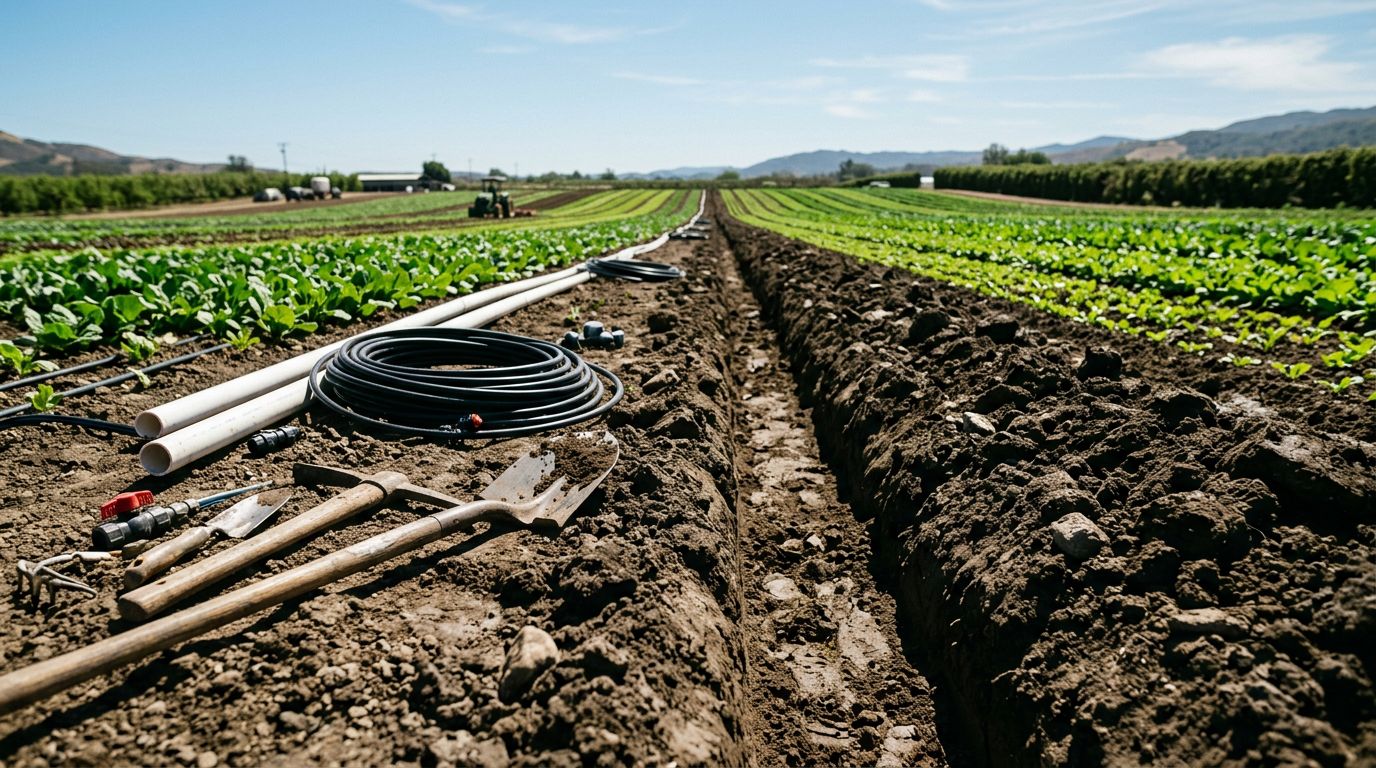
Here is how we recommend choosing the right trenching method, step by step:
- Measure the total length of your runs. Short runs under 50 feet can often be done by hand. Longer runs call for a machine.
- Check your soil type. Clay soil, which is common around Celina and Prosper, is tougher to dig. Machines handle it much better than a shovel.
- Look for obstacles. Sidewalks, driveways, patios, and tree roots all affect your choice. Boring may be needed to cross hard surfaces.
- Consider your lawn condition. If you have an established, healthy lawn, vibratory plowing keeps damage to a minimum.
- Factor in your budget and timeline. Manual digging is cheap but slow. Machines cost more but finish fast.
- Think about future changes. If a pool or patio is in your plans, you may need to reroute lines later.
When homeowners are adding a pool or expanding a patio, existing irrigation lines often get in the way. Our irrigation rerouting for pools and patios in Celina handles those tricky situations so your system keeps running without a hitch.
What Tools and Equipment Are Needed for Irrigation Trenching
The tools you need depend heavily on the method you choose. A small hand-dug job needs very little. A big machine-trenched project needs serious equipment. Below we break it down by category so you know what to expect.
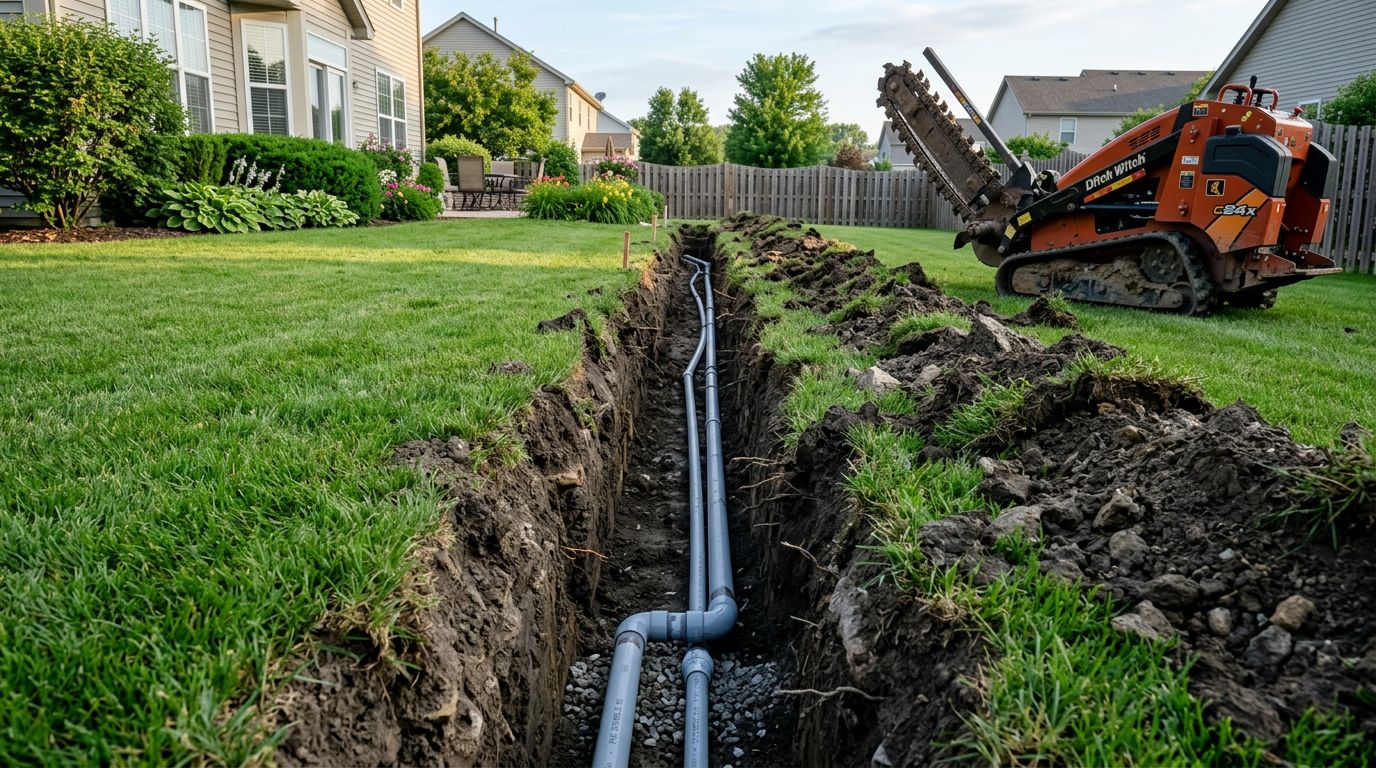
Hand Tools for Manual Trenching
For smaller jobs, you can get away with basic tools. A sharp trenching spade is your best friend. It creates a narrow, clean cut that is easier to backfill. You will also want:
- A trenching shovel or spade
- A pick or mattock for hard, dry clay
- A tape measure and marking paint
- Work gloves and knee pads
- A wheelbarrow to move loose soil
Power Equipment for Machine Trenching
When the runs get long, power equipment saves the day. These machines cut through soil fast and keep your trench depth consistent. Common options include:
- Walk-behind trenchers for tight yards
- Ride-on trenchers for large properties
- Vibratory plows for pipe pulling
- Directional boring machines for going under driveways
Safety and Marking Gear
Before ANY digging happens, safety comes first. Always call for utility line locates. Hitting a gas or electric line is dangerous and expensive. We also use flags, spray paint, and locators to map out the path before we cut into the ground.
Pipe and Fitting Supplies
Trenching is only half the story. You also need the pipe, fittings, and connectors that go into the trench. Having these on hand before you start keeps the job moving. PVC and poly pipe are the most common choices, along with the glue, primer, and clamps to hold everything together.
How Deep Should Irrigation Trenches Be
Trench depth matters more than people think. Too shallow, and your pipe can freeze, get crushed by foot traffic, or get sliced by an aerator. Too deep, and you are wasting effort and money. In the North Texas climate, we do not deal with deep frost lines like colder states, but we still want enough cover to protect the system year-round.
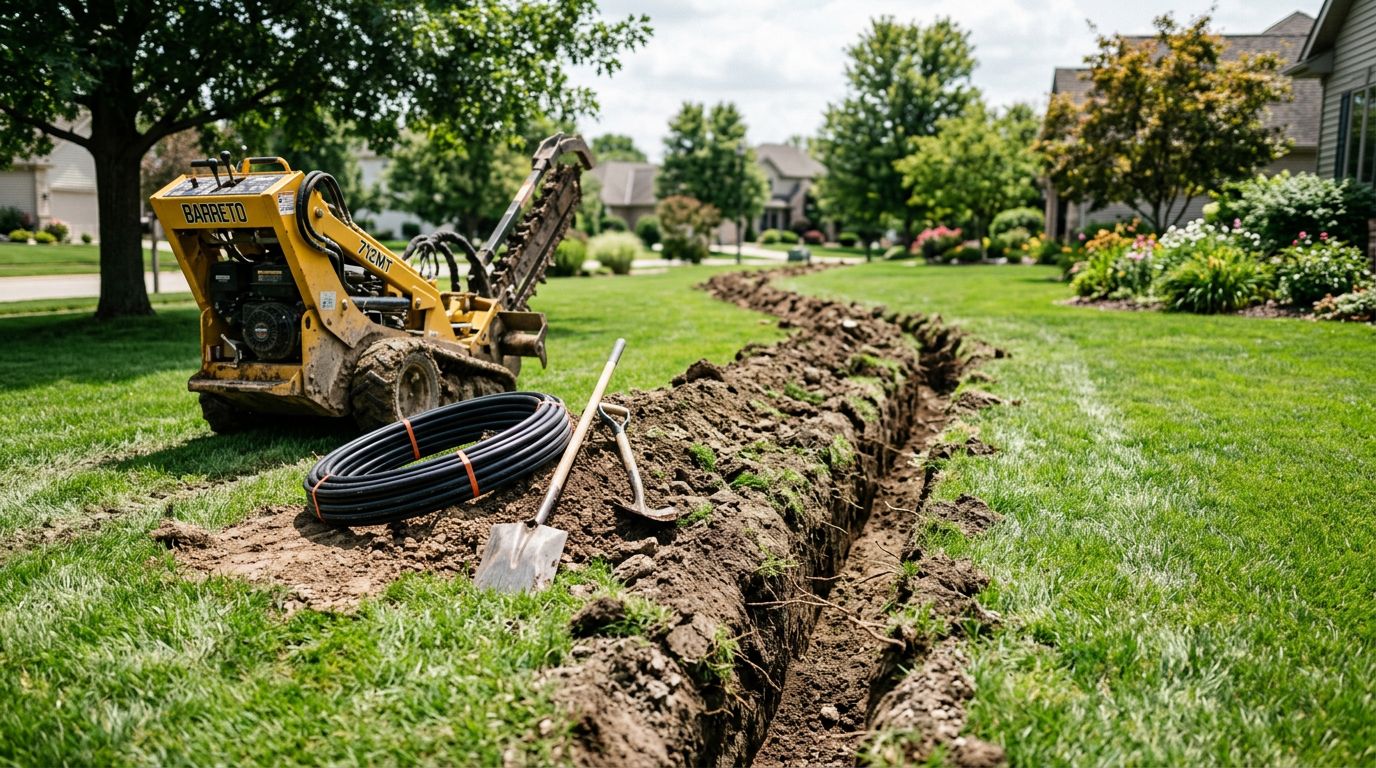
Here are the general depth guidelines we follow:
- Main supply lines: 12 to 18 inches deep for solid protection.
- Lateral lines: 8 to 12 inches deep is usually enough.
- Drip irrigation lines: 6 to 8 inches, since these run at low pressure.
- Under driveways or sidewalks: 18 inches or more, often in a protective sleeve.
- Wiring for valves: Run alongside the pipe at the same depth when possible.
Depth also ties into drainage. If water pools around your lines, it can cause problems over time. We often pair trenching work with proper drainage solutions in Celina so your yard stays healthy and your system lasts.
Manual vs Machine Trenching: Which Is Better
This is one of the most common questions we get. The honest answer is that it depends on the job. Both methods have real advantages. Let us break down each one so you can decide what fits your project.
When Manual Trenching Wins
Manual trenching is the way to go for small, precise jobs. If you only need a short run or you are working around delicate plants and tree roots, a shovel gives you control that a machine cannot match. It is also cheaper since you are not renting equipment. The downside is that it is SLOW and hard on your back, especially in dry clay soil.
Manual trenching makes sense when:
- The job is under 50 feet
- You are working in tight spaces
- You want to avoid tree roots and utilities
- Budget matters more than speed
When Machine Trenching Wins
Machine trenching is the clear choice for bigger projects. A trencher can cut hundreds of feet in the time it takes to hand-dig a fraction of that. The depth stays consistent, which means fewer problems down the line. The catch is the cost of renting or hiring, and the fact that machines can tear up a lawn more than hand tools.
Machine trenching makes sense when:
- You have long runs across a large yard
- The soil is hard, rocky, or heavy clay
- You need the job done quickly
- You are installing a full-property system
Our Take
For most full-yard installs in Frisco, McKinney, and Prosper, we lean toward machine trenching for the main work and hand tools for the finishing touches. That combo gives you speed AND precision. For a small repair or a single zone, hand digging often does the trick.
Common Irrigation Trenching Mistakes to Avoid
We have been called out to fix plenty of trenching jobs that went sideways. Most of the problems come from a handful of avoidable mistakes. Knowing what to watch for can save you a repeat dig and a lot of wasted money. Trenching may look simple, but small errors add up fast.
Here are the most common irrigation trenching mistakes we see:
- Skipping utility locates. Never dig without calling for line locates first. This is the number one safety rule.
- Digging too shallow. Pipe near the surface freezes, cracks, or gets damaged by lawn equipment.
- Uneven trench depth. Inconsistent depth creates low spots where water and debris collect.
- Not planning the layout first. Trenching without a clear pipe plan leads to wasted digging and crossed lines.
- Ignoring slope and drainage. Trenches that trap water can lead to soggy spots and pipe stress.
- Poor backfilling. Loose backfill settles over time and creates dips in your lawn. Tamp it down as you go.
- Forgetting sleeves under hardscapes. Pipe under driveways needs a protective sleeve so it does not get crushed.
- Cutting corners near trees. Slicing through big roots can hurt the tree and damage your pipe later.
Avoiding these mistakes is a big part of what separates a system that lasts for decades from one that needs repairs every season. When in doubt, take your time and measure twice before you dig.
Conclusion
Irrigation trenching is the foundation of a reliable sprinkler system. From manual digging on small jobs to machine trenching and boring on big properties, the right method depends on your yard, your soil, and your goals. Get the depth right, use the correct tools, and steer clear of the common mistakes, and your system will serve you well for years.
At Matehuala Landscape And Irrigation, we proudly serve Celina, Frisco, Little Elm, Prosper, McKinney, Anna, Aubrey, Melissa, and Gunter. If you are ready to install a new system or need trenching done the right way, reach out to our team and let us handle the hard work for you.


