

Drought Tolerant Landscaping Plants (Best Picks 2026)
Here in North Texas, the summers get HOT and the water bills get even hotter. That is why more homeowners are asking us about drought tolerant landscaping plants that can handle the heat without draining the well. At Matehuala Landscape And Irrigation in Celina, we help folks build yards that look green and healthy while sipping water instead of gulping it.
In this guide, we are sharing our best picks for 2026. These plants thrive in our tough Texas climate, cut down on maintenance, and still turn heads. Let us dig in.
What Are the Best Drought Tolerant Landscaping Plants for 2026
The best drought tolerant plants are the ones that shrug off heat, need very little water once established, and still bring color and texture to your yard. We pick plants that fit North Texas soil and sun. Native and adapted species almost always win here because they already know how to survive our dry spells.
Here are our top picks for 2026 that we love using in local landscapes:
- Texas Sage (Cenizo) – Silvery leaves with purple blooms that pop after a rain.
- Lantana – Tough, colorful, and blooms all summer long.
- Autumn Sage (Salvia greggii) – A hummingbird favorite that handles heat with ease.
- Blackfoot Daisy – Low-growing white flowers that spread nicely.
- Yucca – Bold, architectural, and nearly impossible to kill.
- Red Yucca (Hesperaloe) – Sends up tall coral spikes bees and birds love.
- Muhly Grass – Pink plumes in fall that add movement and softness.
- Agave – A striking succulent that thrives in dry, sunny spots.
- Rosemary – Smells great, resists drought, and doubles as an herb.
- Damianita – Bright yellow flowers on a compact, tidy shrub.
How Do Drought Tolerant Plants Save Water and Money
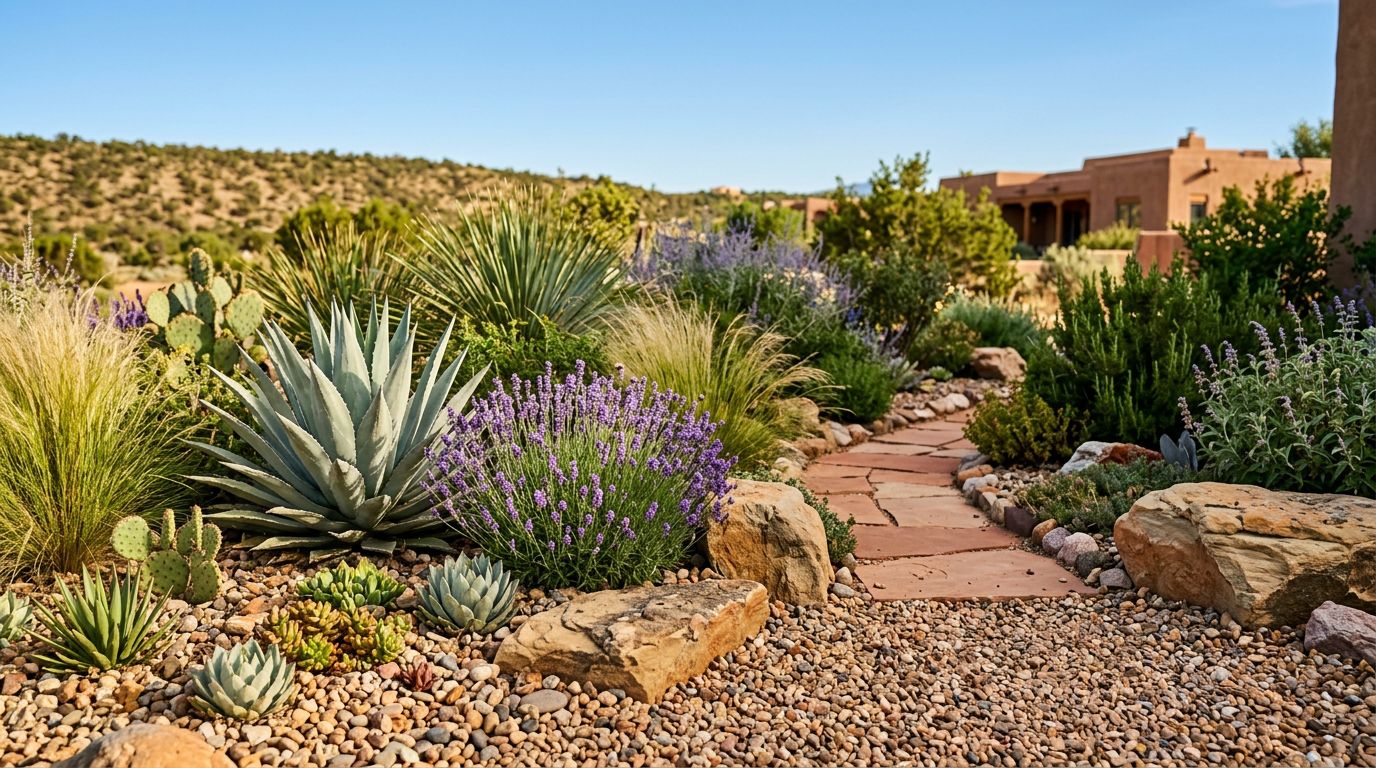
Drought tolerant plants do a lot more than survive dry weather. They cut your water use, lower your monthly bills, and reduce the hours you spend babying your yard. Once these plants are settled in, most of them get by on rainfall alone during a normal season. That adds up to real savings over time.
Lower Water Bills
Traditional lawns and thirsty flower beds can eat up a huge chunk of your water usage in summer. Swapping some of that out for drought tolerant plants means less watering, plain and simple. Pair those plants with the right watering system and the savings get even better. We often recommend upgrading to smart irrigation controllers built for Texas climates so your system only runs when it truly needs to.
Less Maintenance Time
These plants do not need constant mowing, feeding, or fussing. That frees up your weekends and cuts back on fuel and equipment costs too. Many drought tolerant shrubs and grasses only need a light trim once or twice a year.
Fewer Replacements
Plants that match our climate live LONGER. When you stop fighting the weather, you stop replacing plants that fried in July. That means you buy less and plant less over the years.
Which Drought Tolerant Plants Work Best in Your Climate Zone
North Texas sits in a spot where summers are brutal and winters can still nip. Picking plants that handle both extremes matters. Below we break down what works based on the conditions in your yard.
Full Sun Areas
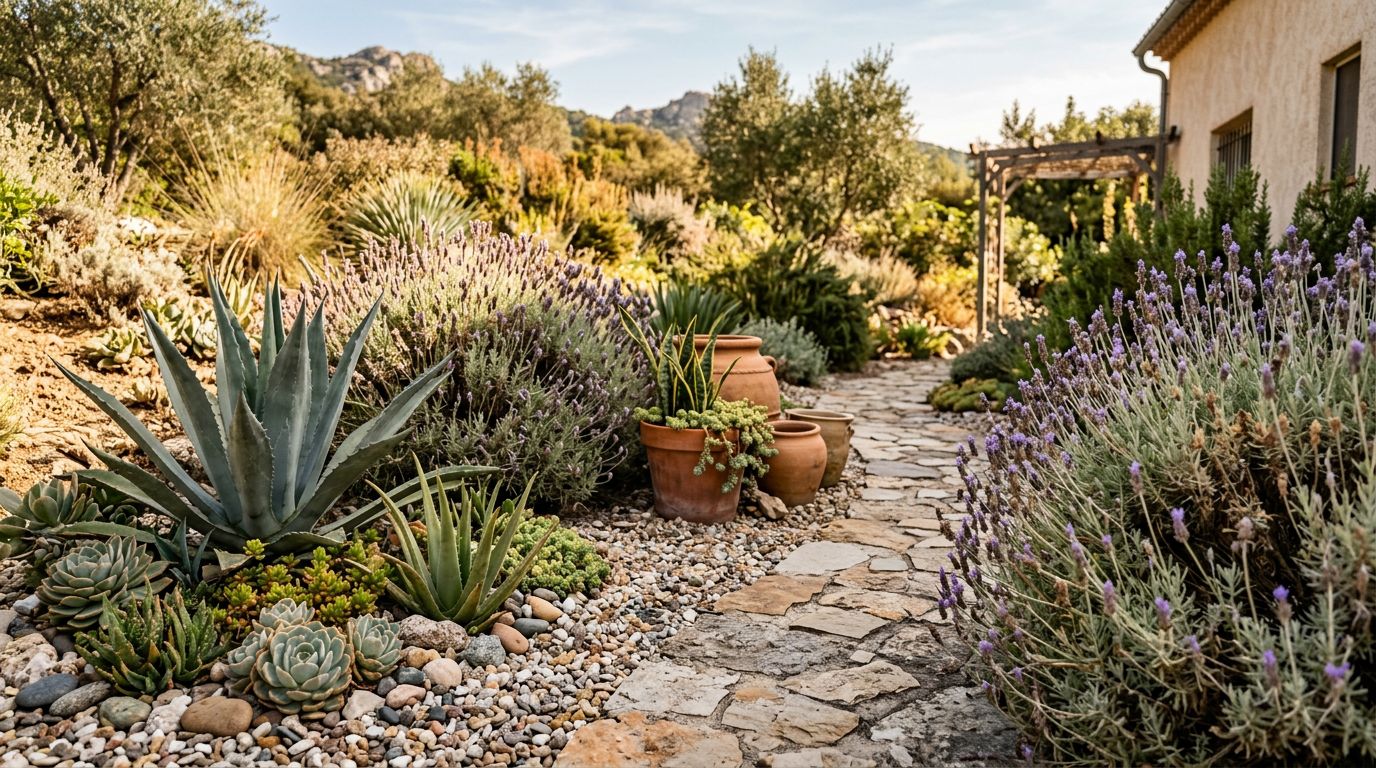
If your yard bakes all day, lean on the toughest customers. Agave, yucca, red yucca, Texas sage, and lantana all soak up full sun without complaint. These are the plants we reach for when a spot gets zero shade.
Partial Shade Spots
Not every corner of your yard is a sunbath. For those in-between areas, try autumn sage, rosemary, and certain salvias. They tolerate some shade and still hold up in dry stretches.
Clay Heavy Soil
A lot of Celina and Prosper yards have heavy clay. That soil holds water and can drown roots. Blackfoot daisy, muhly grass, and yucca handle our local soils well, especially when the beds are prepped right. Good drainage makes a big difference, and that is where proper grading comes into play.
Slopes and Erosion Zones
Got a hill that washes out? Ground-hugging plants like damianita and creeping rosemary grip the soil and slow runoff. They keep your slope green and stop erosion at the same time.
How to Design a Low-Water Landscape With Drought Tolerant Plants
A good low-water landscape is more than just tossing cactus in the ground. It takes planning. You want to group plants smartly, use the right materials, and think about how water moves across your property. When it is done well, a drought tolerant yard looks lush AND uses very little water. Our team handles full landscape design in Celina to help homeowners get it right the first time.
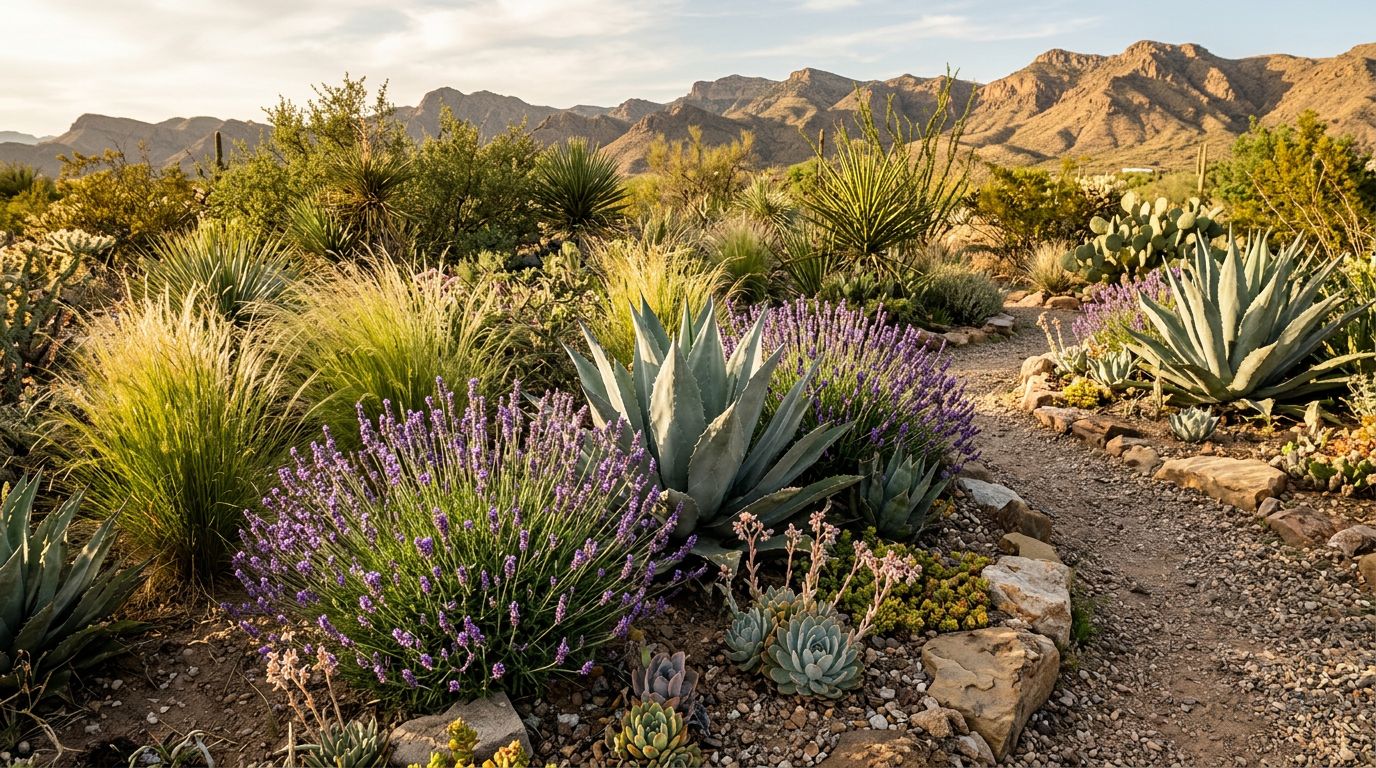
Here is how we approach a low-water design step by step:
- Map your sun and shade. Walk your yard and note where the sun hits hardest. This tells you which plants go where.
- Group plants by water needs. Put thirsty plants together and drought lovers together. This is called hydrozoning and it saves a ton of water.
- Add hardscaping. Patios, gravel paths, and stone beds reduce the amount of yard you have to water at all.
- Use mulch generously. A thick layer of mulch locks in moisture and keeps roots cool.
- Plan your drainage. Direct rainwater toward planting beds so nature does some of the watering for you.
- Install efficient irrigation. Drip lines deliver water right to the roots with almost no waste.
- Leave room to grow. Space plants for their mature size so they fill in without crowding.
How Do You Care for Drought Tolerant Plants After Planting
Here is the thing folks forget: drought tolerant does NOT mean water-free on day one. New plants still need regular watering to build strong roots. Once they are established, usually after the first season, you can back way off. That first year of care sets them up for a long, healthy life.
Follow these tips to keep your new plants thriving:
- Water deeply but less often. Deep watering pushes roots down where the soil stays moist longer.
- Water in the morning. Less evaporation and less risk of fungus.
- Keep mulch topped off. Refresh it a couple times a year to hold moisture.
- Watch for stress signs. Wilting or yellowing early on usually means too much OR too little water.
- Trim lightly. Most of these plants only need a shape-up once or twice a year.
- Skip the heavy fertilizer. Native and adapted plants rarely need it and too much can hurt them.
If keeping up with the yard feels like a lot, our crew offers ongoing lawn care services in Celina to keep everything looking sharp through every season.
Common Mistakes to Avoid With Drought Tolerant Landscaping
We see the same mistakes over and over, and most of them are easy to dodge once you know about them. A drought tolerant yard can fail fast if you overwater it or plant the wrong things in the wrong spots. Avoid these slip-ups and your landscape will reward you for years.
- Overwatering established plants. This is the number one killer. Too much water rots roots and invites disease.
- Ignoring soil drainage. Clay soil that holds water can drown even the toughest plants. Fix drainage first.
- Planting the wrong plant in the wrong spot. A sun lover in the shade will sulk and fade.
- Skipping mulch. Bare soil dries out fast and lets weeds take over.
- Crowding plants. Packing them too close leads to poor airflow and stunted growth.
- Forgetting the first-year watering. New plants need help getting established before they can fend for themselves.
- Using the wrong irrigation setup. Spray heads waste water. Drip and smart controllers do the job better.
Conclusion
Drought tolerant landscaping is one of the SMARTEST moves a North Texas homeowner can make. The right plants save water, cut your bills, and stand up to our hot summers with ease. From Texas sage and yucca to muhly grass and lantana, there is a tough, beautiful plant for every corner of your yard. Pair those plants with smart design, good drainage, and efficient watering, and you get a landscape that looks great while working hard for you.
If you are ready to build a low-water yard that thrives in Celina, Frisco, Prosper, McKinney, and beyond, our team at Matehuala Landscape And Irrigation is here to help. Let us design a drought tolerant landscape that fits your home and your budget.


