

How To Find Buried Irrigation Valve Box (Quick & Easy)
If you have ever needed to shut off a zone or fix a leak, you know the frustration of not being able to find your irrigation valve box. Learning how to find a buried irrigation valve box can save you hours of digging and a lot of guesswork. At Matehuala Landscape And Irrigation in Celina, we deal with hidden valve boxes all the time, and we have picked up a few tricks along the way.
In this guide, we will walk you through why valve boxes disappear, the tools that make the search easier, and the exact steps to track one down. Whether you have fancy equipment or just a screwdriver, we have you covered.
Why Do Irrigation Valve Boxes Get Buried?
Valve boxes are supposed to sit at ground level with an easy-to-remove lid. But over time, they have a way of vanishing under grass, soil, and debris. This usually happens slowly, so you do not notice until you actually NEED to open the box. A few common causes are behind most buried valve boxes, and understanding them helps you know where to look.
- Grass overgrowth. Thick turf and creeping grass can grow right over the top of a lid.
- Soil buildup. Years of mowing, mulching, and natural settling add layers of dirt.
- Landscaping changes. New flower beds, sod, or gravel often cover old boxes.
- Erosion and runoff. Rain moves soil around and can slowly bury a box.
- Improper installation. Sometimes boxes were set too low from the start.
- Mulch and leaves. Organic material piles up and hides the lid.
Once you know the cause, you have a better idea of the general area to search. A box buried by grass will be close to the surface. One buried by a new flower bed might be several inches down.
What Tools Do You Need to Locate a Buried Valve Box?
You do not need a truck full of gear to find a valve box, but the right tools make the job MUCH faster. Some are specialized, and some you probably already have in the garage. If you are dealing with an electrical or wiring issue while searching, it helps to know the warning signs of a faulty irrigation valve so you can spot problems as you go. Here is what we recommend having on hand.
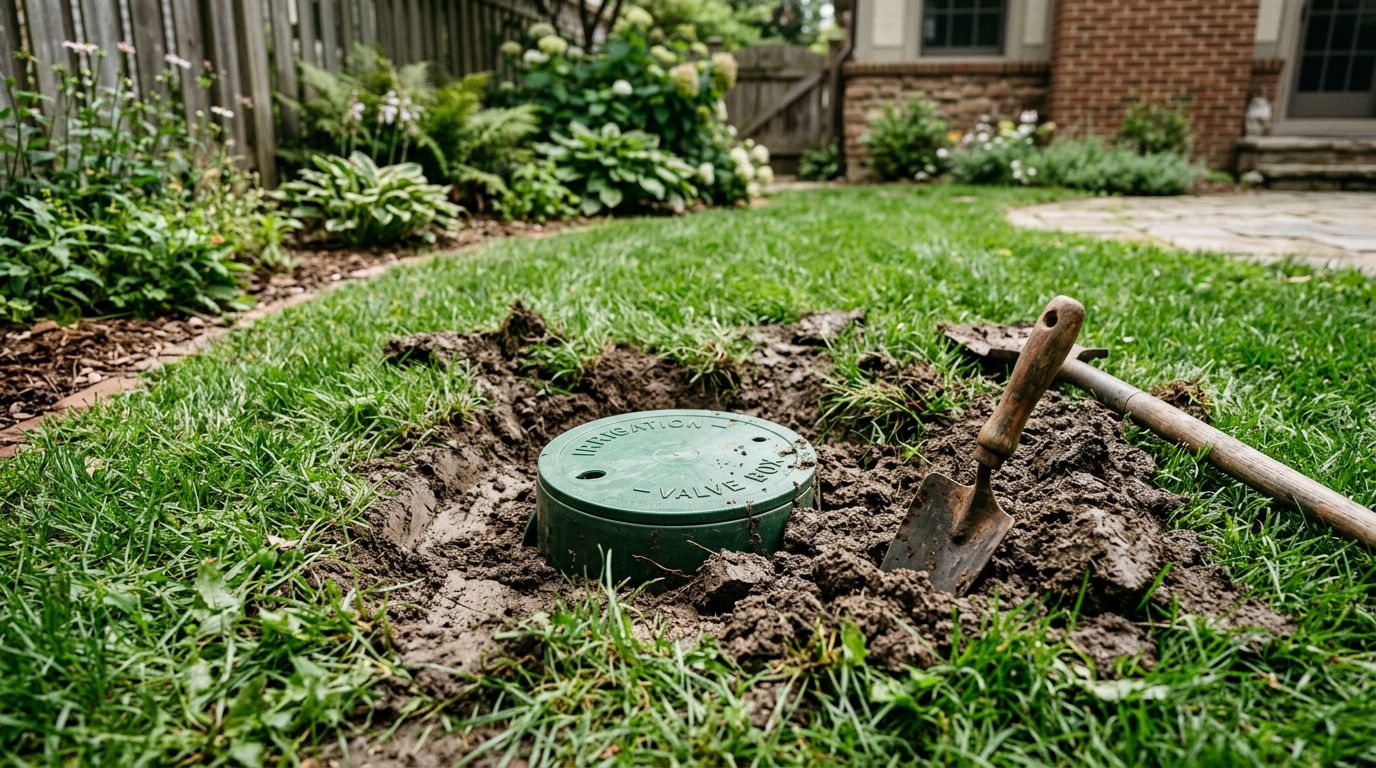
- A long screwdriver or metal probe. Great for poking the ground to feel for the lid.
- A metal detector. Helpful for finding metal parts near the box.
- A valve locator. The most accurate tool, designed just for this job.
- A shovel or hand trowel. For gentle digging once you narrow it down.
- Your irrigation controller. To activate zones and listen for water flow.
- A tape measure. Useful if you have an old system map with measurements.
- Marker flags or spray paint. To mark spots as you search.
Even with just a screwdriver, most homeowners can find a shallow box. The specialized tools shine when the box is deep or the yard is large.
How to Find a Buried Irrigation Valve Box Step by Step
Finding a buried box is really about narrowing down the search area and then probing carefully. Rushing straight to digging usually ends in a torn-up lawn and a lot of frustration. Follow these steps in order and you will save yourself the headache. This process works for almost any yard, and it ties into the most common issues in irrigation systems that lead people to search for their valves in the first place.
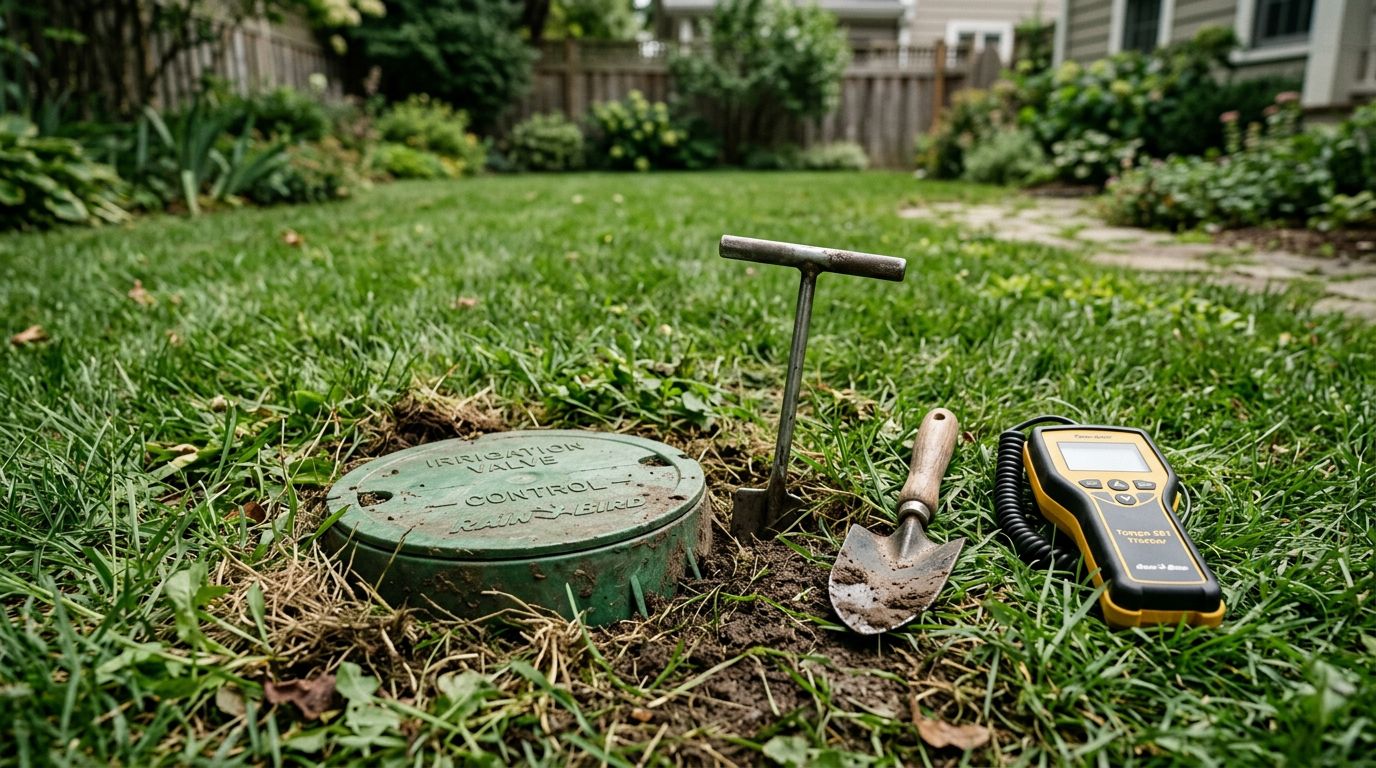
- Start near the water source. Valve boxes are usually installed close to the main water line or backflow preventer.
- Look for clues on the surface. Slight depressions, greener grass, or a raised rectangle can reveal the lid.
- Check common locations. Boxes often sit near the edge of the lawn, along fences, or by the corners of the house.
- Activate a zone. Turn on a sprinkler zone and listen for the buzzing solenoid or rushing water underground.
- Probe the ground. Gently push a screwdriver into the soil in the suspected area. You will feel resistance when you hit the lid.
- Mark the spot. Once you feel the lid, use a flag or spray paint to mark it.
- Dig carefully. Remove grass and soil by hand or with a small trowel to uncover the lid without damaging the valves.
Take your time with the probing step. Pushing too hard can crack the lid or damage the parts inside. Slow and steady wins here.
How to Use a Valve Locator or Metal Detector
When the simple methods fail, specialized equipment steps in. Both a valve locator and a metal detector can help, but they work in different ways. Here is how to get the most out of each one.
Using a Valve Locator
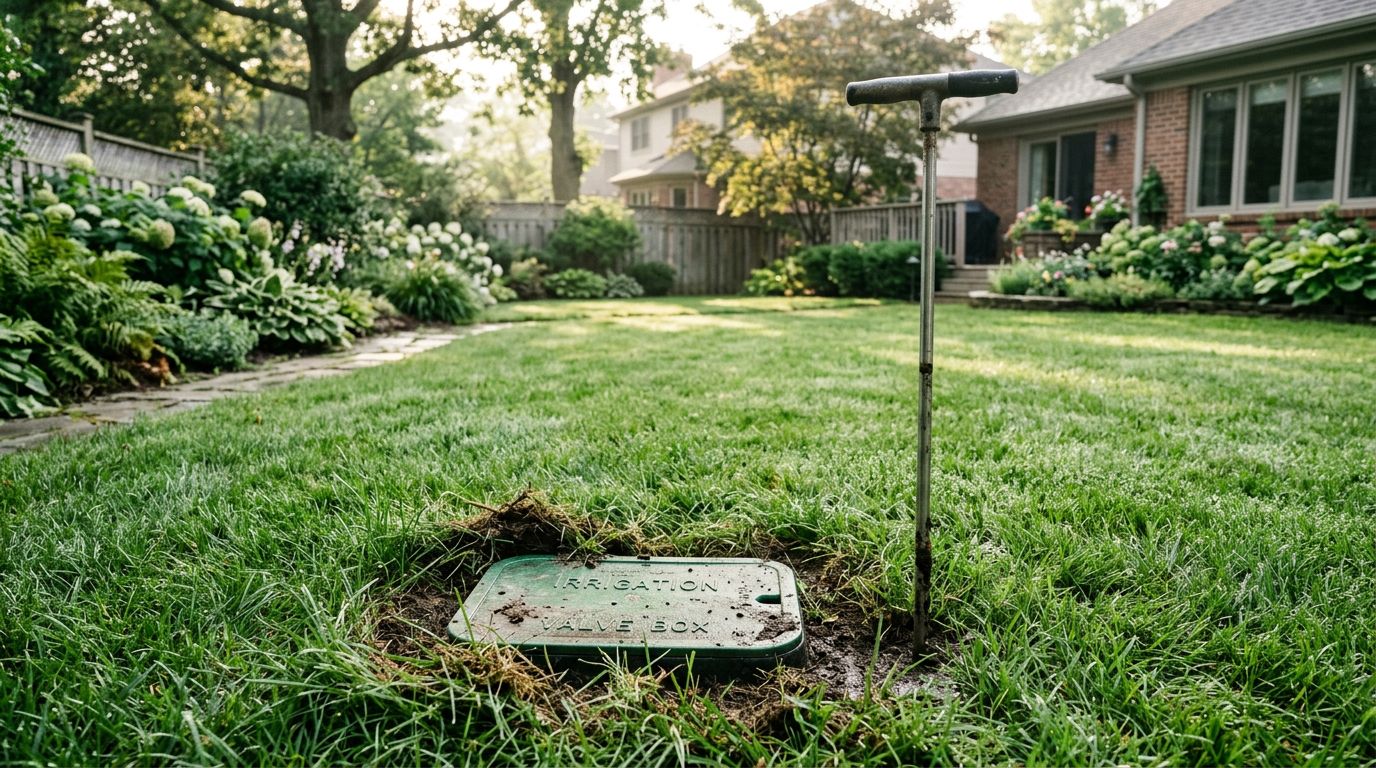
A valve locator is the PRO choice for a reason. It sends a signal along the wire that runs from your controller to the valve solenoid. Connect the transmitter to the controller wire, then walk the yard with the receiver. The signal gets stronger as you approach the valve. When the receiver peaks, you are standing right over the box. This method works even when the box is buried deep, and it is very accurate.
Using a Metal Detector
A metal detector does not track wires, but it can find the metal components in and around a valve box. Sweep the detector slowly over the suspected area. Listen for a strong, steady signal that covers a rectangular shape. Keep in mind that a metal detector can also pick up random junk in the soil, so you may get a few false hits. Once you get a solid reading, probe the ground to confirm you have found the lid and not a stray nail or pipe.
Tips for Best Results
For either tool, work in a grid pattern so you do not miss any spots. Move slowly and overlap your passes. If you have an idea of the general area, focus there first before expanding your search. Patience pays off with both devices.
How to Find Valves Without Special Equipment
Not everyone has a valve locator lying around, and that is fine. Plenty of valve boxes can be found with basic tools and a bit of detective work. These low-tech methods have helped us and countless homeowners locate boxes when no fancy gear was available. If you get stuck, our team offers irrigation repair in Celina TX and can locate stubborn valve boxes for you.
- Follow the water line. Trace the path from your backflow device or main shutoff. Valves are usually along this line.
- Listen for the solenoid. With the system running, put your ear near the ground. The solenoid makes a faint humming or clicking sound.
- Look for pattern clues. Boxes are often installed near zone boundaries, right where one section of sprinklers meets another.
- Check old records. If you have an irrigation map or install paperwork, it may show valve locations.
- Ask the previous owner or installer. A quick conversation can save hours of searching.
- Probe systematically. Use a screwdriver to test the soil in a grid across the likely area.
- Watch for surface dips. Buried lids often create a slight rectangular depression in the lawn.
Combine a few of these methods for the best results. Listening for the solenoid while probing the ground is a powerful combo that works surprisingly often.
How to Prevent Valve Boxes From Getting Buried Again
Once you dig up a valve box, the last thing you want is to hunt for it again next year. A little maintenance keeps your boxes visible and accessible for years. Here are the habits that make a big difference.
Keep the Lid at the Right Height
When you reset the box, make sure the lid sits flush with or slightly above the surrounding soil. If the box is too low, add an extension ring or raise the whole box. Keeping it at grade prevents soil and grass from creeping over the top.
Trim Grass and Weeds Regularly
Grass loves to reclaim a valve box lid. Trim around the box every few weeks during the growing season. Regular maintenance around your irrigation components keeps everything easy to find and reduces the chance of overgrowth hiding the lid again.
Mark the Location
Take a photo of the box and note its position relative to a fixed landmark, like a fence post or the corner of the house. Some people install a small decorative marker nearby. Just make sure it is something you will remember and that will not get moved.
Avoid Piling Mulch or Soil
When you refresh mulch or add topsoil, keep it away from the valve box lid. It only takes a couple of seasons of buildup to bury a box. Leaving a clear border around the lid keeps it accessible.
Schedule Routine Inspections
A yearly check of your irrigation system is a smart move. During the inspection, confirm every valve box is visible and the lids open easily. Catching a slowly sinking box early is much easier than digging it out later.
Conclusion
Finding a buried irrigation valve box does not have to be a nightmare. Start near the water source, look for surface clues, and probe the ground carefully. If you have a valve locator or metal detector, even better. And once you find it, take a few simple steps to keep it visible for the future.
If you would rather skip the digging, or if you run into a stubborn box that will not turn up, our team at Matehuala Landscape And Irrigation is happy to help. We serve Celina, Frisco, Prosper, McKinney, and the surrounding areas with reliable irrigation service. Reach out whenever you need a hand with your system.


