Sprinkler Zones For Sloped Yard (Complete Setup Guide)
Watering a sloped yard is a whole different ballgame than watering a flat one. If you have ever noticed water rushing down a hill and pooling at the bottom, you already know the problem. Setting up proper sprinkler zones for a sloped yard is the key to getting even coverage without wasting water or washing away your soil. At Matehuala Landscape And Irrigation in Celina, we deal with slopes all the time across North Texas, and we know how to make them work.
In this guide, we will walk you through everything you need to know. From dividing your yard into smart zones to picking the right heads and timing your run cycles, we have got you covered. Let us dig in.
Why Sloped Yards Need Special Sprinkler Zone Planning
Gravity is not your friend when it comes to irrigation on a hill. Water naturally flows downhill, which means the top of your slope tends to dry out while the bottom stays soggy. On flat ground, water soaks in where it lands. On a slope, it runs off before the soil can absorb it. That leads to dry patches, dead grass, and erosion all at once.
Because of this, sloped yards demand careful planning that flat yards simply do not. You cannot just throw a few sprinkler heads out there and hope for the best. Here is why sloped terrain needs a smarter approach:
- Uneven water absorption means the top and bottom of a slope need different amounts of water.
- Runoff waste drives up your water bill while leaving parts of the lawn thirsty.
- Soil erosion can strip away topsoil and expose roots over time.
- Pressure differences occur along a slope, affecting how far and evenly water sprays.
- Pooling at the base can drown plants and create muddy, unusable areas.
- Grouping heads at different elevations into one zone leads to inconsistent watering.
The bottom line is that a slope changes how water behaves. Once you understand that, you can plan zones that work WITH gravity instead of fighting against it.
How to Divide a Sloped Yard Into Sprinkler Zones
The single most important rule for sloped irrigation is to group sprinkler heads by ELEVATION. Heads at the top of a hill should be on a separate zone from heads at the bottom. This way, each zone can run for the right amount of time based on how quickly that section absorbs water. When you get the zoning right, a professional irrigation installation in Celina TX will keep your entire yard green from crown to base.
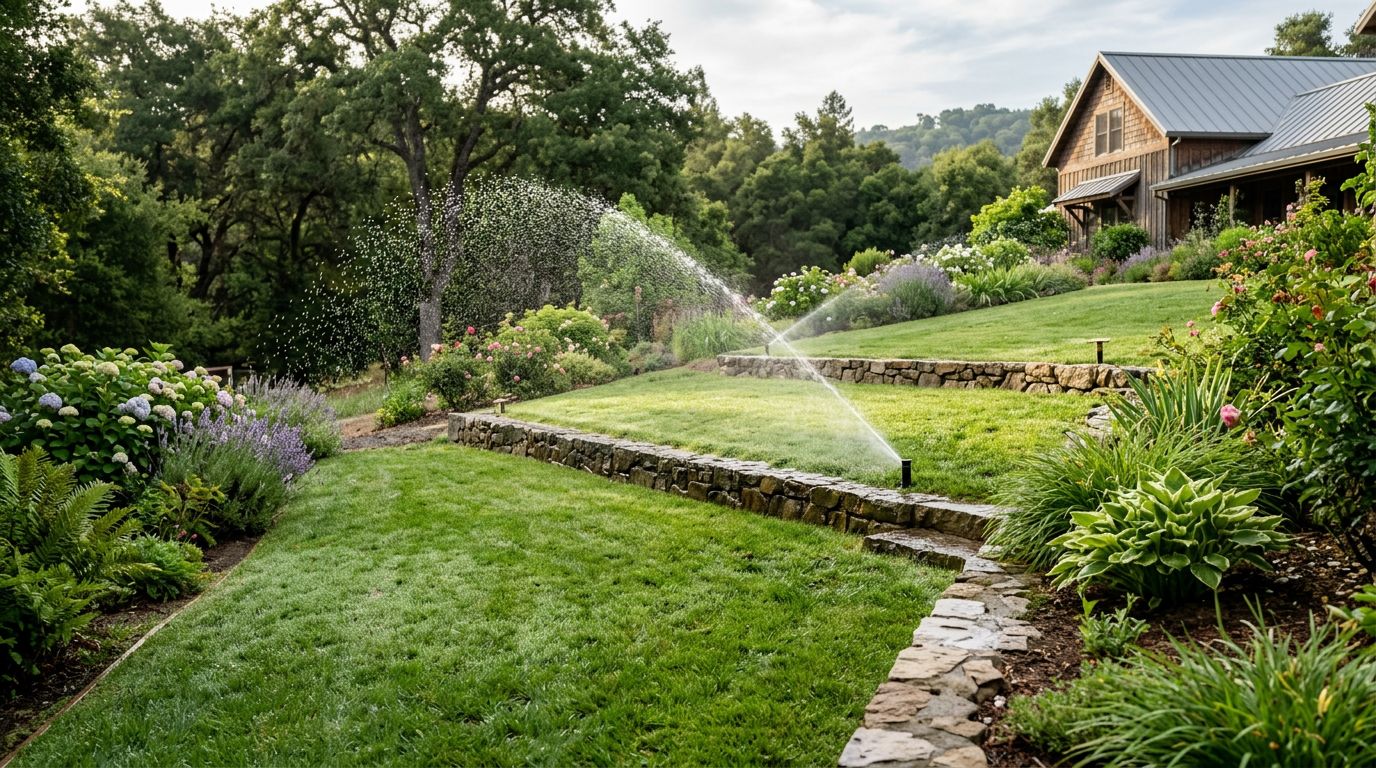
Here is how we recommend breaking down a sloped yard into effective zones:
- Map your slope. Walk the yard and note where the high points, low points, and transitions are. Sketch it out if that helps.
- Divide by elevation bands. Split the slope into horizontal sections, such as top, middle, and bottom. Each band becomes its own zone.
- Keep similar plants together. Group turf areas separately from shrubs or flower beds since they have different water needs.
- Account for sun and shade. A south-facing slope dries faster than a shaded one, so those may need their own zones too.
- Check your water pressure. Make sure each zone has enough pressure to run all its heads at once without weak spray.
- Plan for the drainage flow. Know where excess water naturally travels so you can zone around problem areas.
By zoning this way, you gain full control over each section. The top of the hill can get a longer soak while the bottom gets a shorter run. That balance is what keeps a sloped lawn healthy.
What Sprinkler Heads Work Best on Slopes
Not all sprinkler heads perform the same on a hill. The right head can dramatically cut down on runoff and improve coverage. Here are the types we lean on for sloped yards.
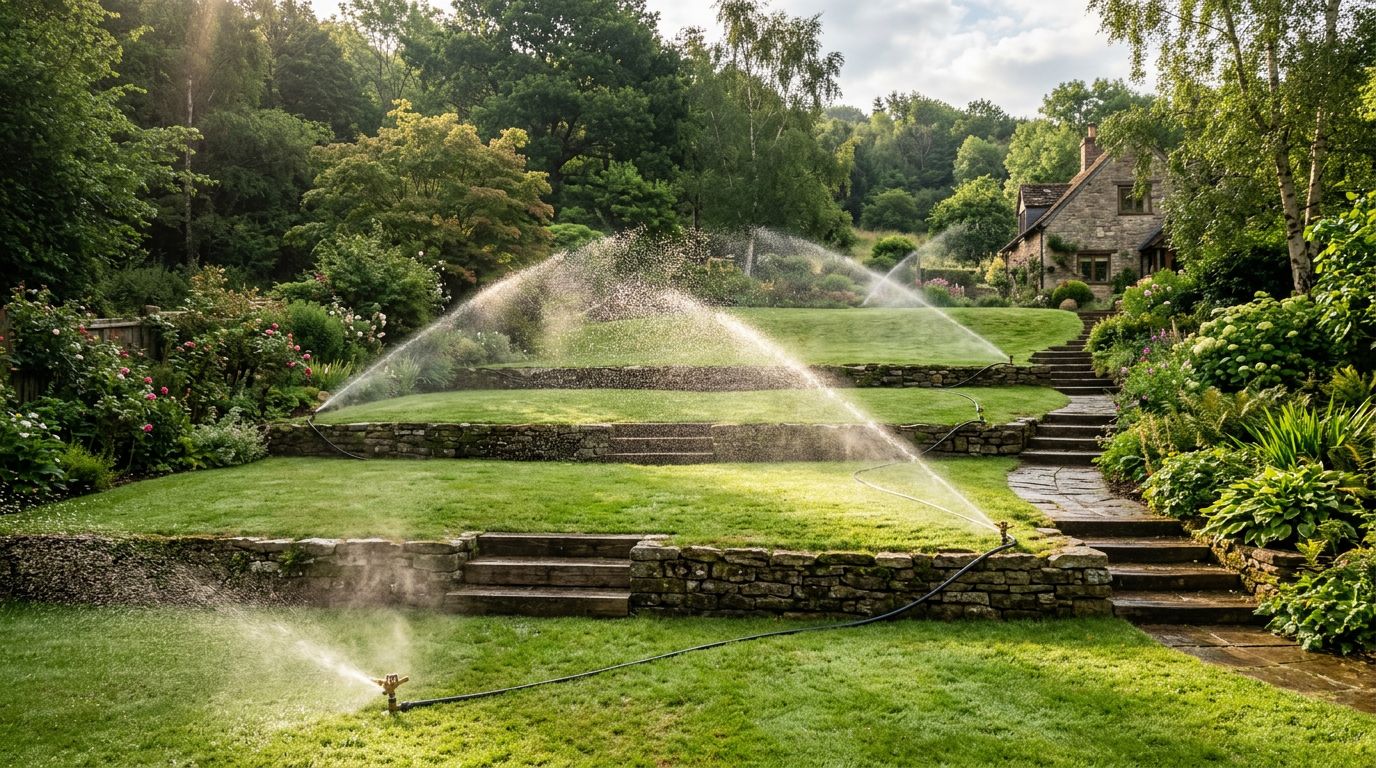
Rotary Nozzles
Rotary nozzles are one of our favorites for slopes. They apply water slowly in rotating streams, which gives the soil more time to absorb it. Because the precipitation rate is low, water is far less likely to run off before it soaks in. They also offer excellent uniformity across a zone.
Pressure-Regulated Spray Heads
On a slope, water pressure varies from top to bottom. Pressure-regulated heads keep the output steady no matter the elevation. This prevents misting at high-pressure points and weak spray at low-pressure spots. Consistent pressure equals consistent coverage.
Heads With Check Valves
When a zone shuts off, gravity pulls leftover water in the lines down to the lowest heads. Those heads then drip and drain, wasting water and creating soggy spots at the base of the slope. Check valves stop this low-head drainage cold. They are a MUST on any significant grade.
Rotor Heads for Large Slopes
For big, open sloped areas, rotor heads cover more ground with fewer heads. They throw water in a slow, sweeping motion that works well on turf. Just make sure they are properly spaced and adjusted. Getting the throw right matters, and we cover the details of adjusting sprinkler heads for coverage so no part of your slope gets missed.
How to Prevent Runoff and Erosion on Sloped Irrigation
Runoff is the number one enemy of a sloped sprinkler system. When water flows off faster than the ground can drink it in, you get erosion, wasted water, and unhappy plants. The good news is that runoff is preventable with the right techniques. The key is slowing water down and giving the soil time to absorb every drop.
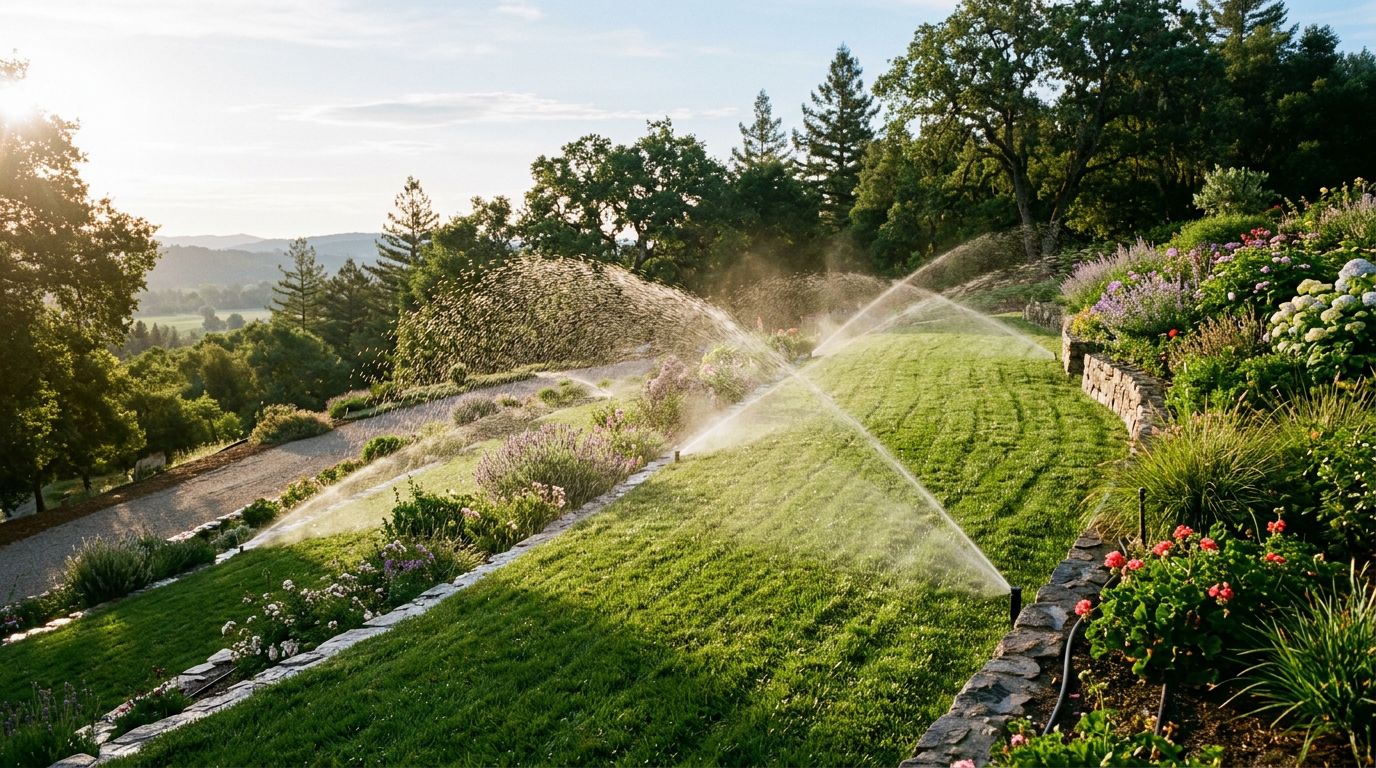
Here are the strategies we use to keep water where it belongs:
- Use low-precipitation heads like rotary nozzles so water applies slower than the soil absorption rate.
- Run cycle-and-soak schedules that break watering into short bursts with rest periods in between.
- Add mulch to planting beds to hold moisture and reduce the speed of surface water.
- Aerate compacted soil so water can penetrate instead of sliding across the top.
- Plant ground cover on steep sections to anchor soil and slow runoff naturally.
- Install proper grading and drainage to direct excess water safely away.
Sometimes the water problem is bigger than the sprinklers alone can fix. If your slope struggles with standing water or constant runoff, our drainage solutions in Celina TX can redirect that flow and protect your landscape investment. Combining smart irrigation with good drainage is the winning formula for any hill.
Setting Sprinkler Zone Run Times and Cycle Soak Schedules
Here is where a lot of homeowners go wrong. On a slope, running each zone for one long stretch just creates runoff. The soil can only absorb so much before the rest slides away. The solution is called CYCLE AND SOAK. Instead of one long watering, you break it into several shorter cycles with soak breaks in between. This lets the water sink in deep without ever pooling or running off.
Follow these steps to set up an effective cycle and soak schedule:
- Figure out your total watering time. Determine how many minutes each zone needs overall for a deep watering.
- Split it into shorter cycles. Divide that total into two or three shorter runs. For example, three runs of five minutes instead of one fifteen-minute run.
- Add soak periods. Give the soil thirty minutes to an hour between cycles to fully absorb the water.
- Adjust by elevation. Give the top of the slope slightly longer or more frequent cycles since it drains fastest.
- Water in the early morning. This reduces evaporation and gives the lawn time to dry before nightfall.
- Watch and adjust. Check for any runoff or dry spots after a week and fine-tune the times as needed.
The goal is deep, infrequent watering that trains roots to grow down. Shallow daily watering creates weak roots that dry out fast. Cycle and soak builds a tougher, more drought-resistant lawn, especially in our North Texas heat.
Common Mistakes When Setting Up Sprinkler Zones on a Slope
We have seen plenty of DIY slope systems that just do not work, and the mistakes are usually the same ones over and over. Avoiding these pitfalls will save you money, headaches, and a lot of dead grass. A slope is unforgiving, so getting the details right the first time really pays off.
Here are the most common slope irrigation mistakes to watch out for:
- Mixing elevations in one zone. Putting top and bottom heads together guarantees uneven watering.
- Skipping check valves. This leads to low-head drainage and soggy spots at the base of the hill.
- Running one long cycle. Long runs create runoff before the soil can absorb the water.
- Using high-flow heads. Heads that put out water too fast overwhelm sloped soil instantly.
- Ignoring pressure differences. Without regulation, high spots mist and low spots dribble.
- Poor head spacing. Gaps in coverage show up fast as brown streaks on a slope.
- Forgetting about drainage. Even a perfect sprinkler setup fails if excess water has nowhere to go.
- Watering at the wrong time. Midday watering wastes water to evaporation and encourages disease.
Most of these mistakes come from treating a slope like flat ground. Once you respect the grade and plan around it, the whole system runs smoother. When in doubt, it is worth having a pro evaluate the layout before you dig.
Conclusion
Setting up sprinkler zones on a sloped yard takes more thought than a flat lawn, but the payoff is a green, healthy landscape without wasted water or erosion. Remember the big points: group heads by elevation, choose low-precipitation heads with check valves, use cycle and soak schedules, and pair your irrigation with solid drainage. Those steps make all the difference on a hill.
If your sloped yard in Celina, Frisco, Prosper, McKinney, or anywhere across North Texas needs a smarter irrigation setup, Matehuala Landscape And Irrigation is ready to help. Reach out to us today and let us build a system that keeps every inch of your slope looking its best.