Irrigation Zone Won’t Shut Off? (Causes & Fixes)
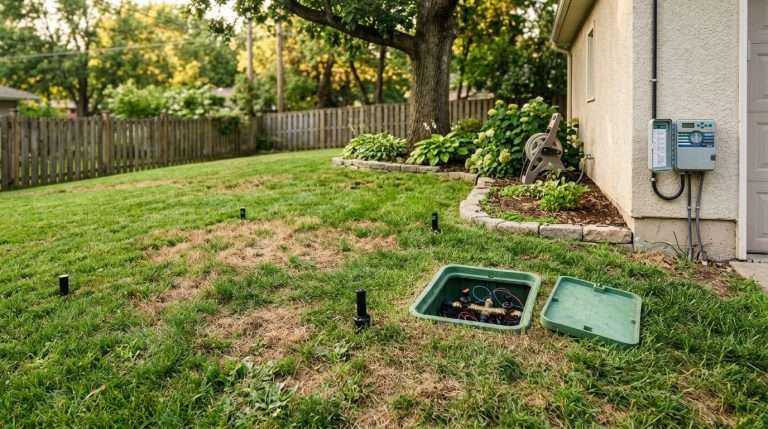
There is nothing quite like walking outside and finding one of your irrigation zones STILL running long after it should have shut off. Maybe the water is pooling in the yard. Maybe your water bill just doubled. If your irrigation zone won’t shut off, you are dealing with a problem that needs attention fast, because wasted water adds up quickly and can even damage your landscape.
At Matehuala Landscape And Irrigation, we see this issue all the time across Celina and the surrounding areas. The good news is that a zone that keeps running usually points to a few common culprits. In this guide, we will walk you through why it happens, how sprinkler valves actually work, and what you can do about it.
Why Won’t My Irrigation Zone Shut Off?
When a single zone refuses to turn off, the problem is almost always at the valve for that zone. The valve is what controls the flow of water to each section of your system. When it gets stuck open, water keeps flowing no matter what your controller is telling it to do. Sometimes the issue is mechanical. Other times it is electrical. And once in a while it is the controller itself sending the wrong signal.
Here are the most common reasons a zone stays on when it should be off:
- Debris in the valve. Dirt, sand, or small rocks can get lodged in the valve and prevent it from sealing shut.
- A torn or worn diaphragm. The rubber diaphragm inside the valve creates the seal. If it cracks or wears out, the valve cannot close.
- A faulty solenoid. This is the electrical part that tells the valve to open and close. A bad one can keep the valve stuck open.
- Wiring problems. A short or a crossed wire can send constant power to a zone.
- Controller malfunction. Sometimes the timer or controller is stuck and keeps signaling the valve to run.
- High water pressure. Too much pressure can prevent the valve from seating properly.
- Manual bleed screw left open. If someone opened the bleed screw for testing and forgot to close it, water keeps flowing.
Spotting the signs early makes a big difference. If you want to learn more about what to watch for, take a look at these common signs of a faulty irrigation valve so you can catch problems before they get worse.
How Does a Sprinkler Valve Work?
To understand why a zone won’t shut off, it helps to know how the valve does its job. A sprinkler valve is a simple but clever device. It uses water pressure AND a small electrical signal to control the flow to each zone. When everything is working right, the process is smooth and automatic. When one piece fails, the whole thing can get stuck.
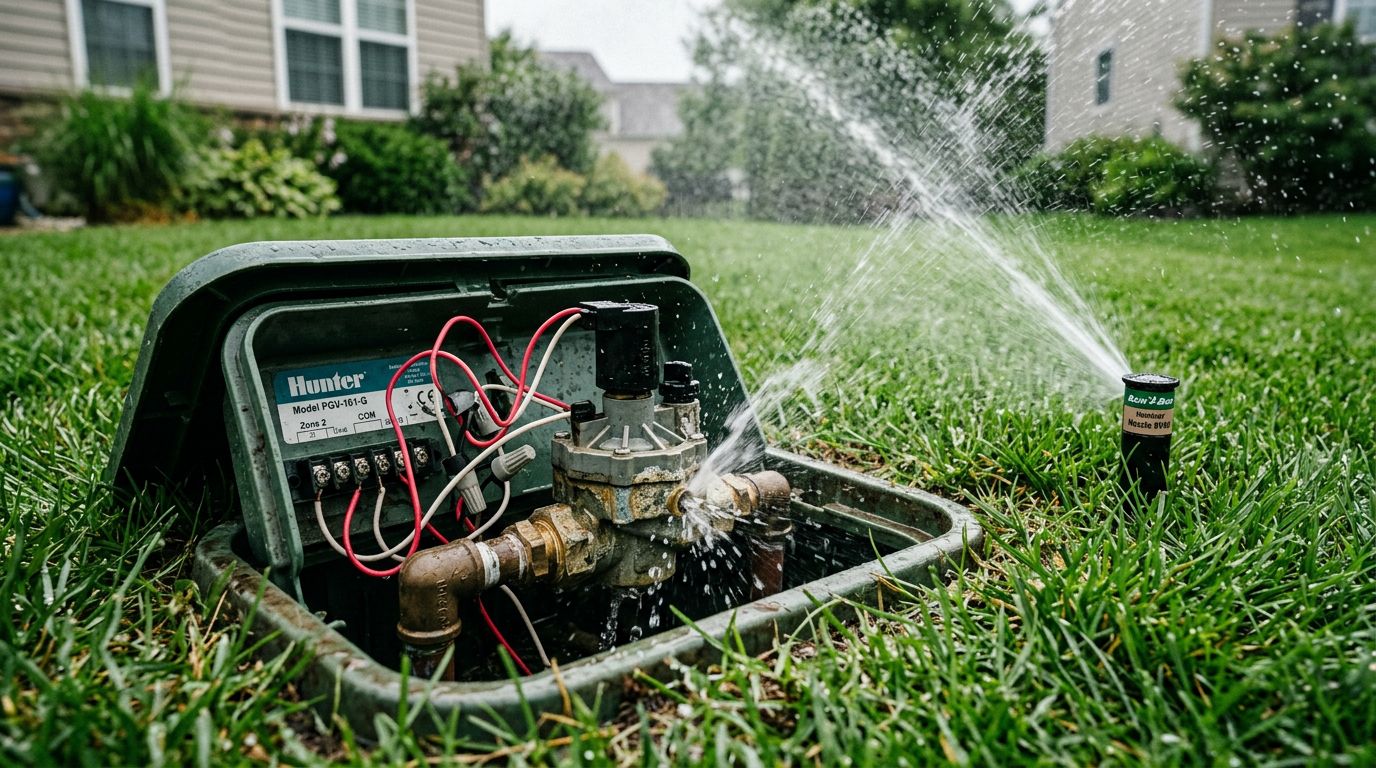
Here is what happens step by step when your system runs a zone:
- Your controller sends a small electrical signal to the solenoid on the valve for that zone.
- The solenoid activates and lifts a tiny plunger inside the valve.
- This releases water pressure from the top chamber of the valve.
- The diaphragm lifts, opening the valve and letting water flow to the sprinkler heads.
- When the controller shuts off the signal, the solenoid drops the plunger back down.
- Water pressure builds back up in the top chamber and pushes the diaphragm down.
- The diaphragm seals against the valve seat, stopping the flow completely.
So a valve actually needs water pressure to CLOSE, not just to open. That is why debris or a torn diaphragm causes it to stay open. If the diaphragm cannot seal or pressure cannot build in the right spot, the water keeps running. Understanding this makes the fixes below a lot easier to follow.
How to Fix a Sprinkler Valve That Won’t Close
Before you start, turn off the water supply to your irrigation system at the main shutoff. This stops the flooding and lets you work on the valve safely. Many valve problems are things a handy homeowner can tackle, though some require experience and the right parts. Take your time and work carefully.
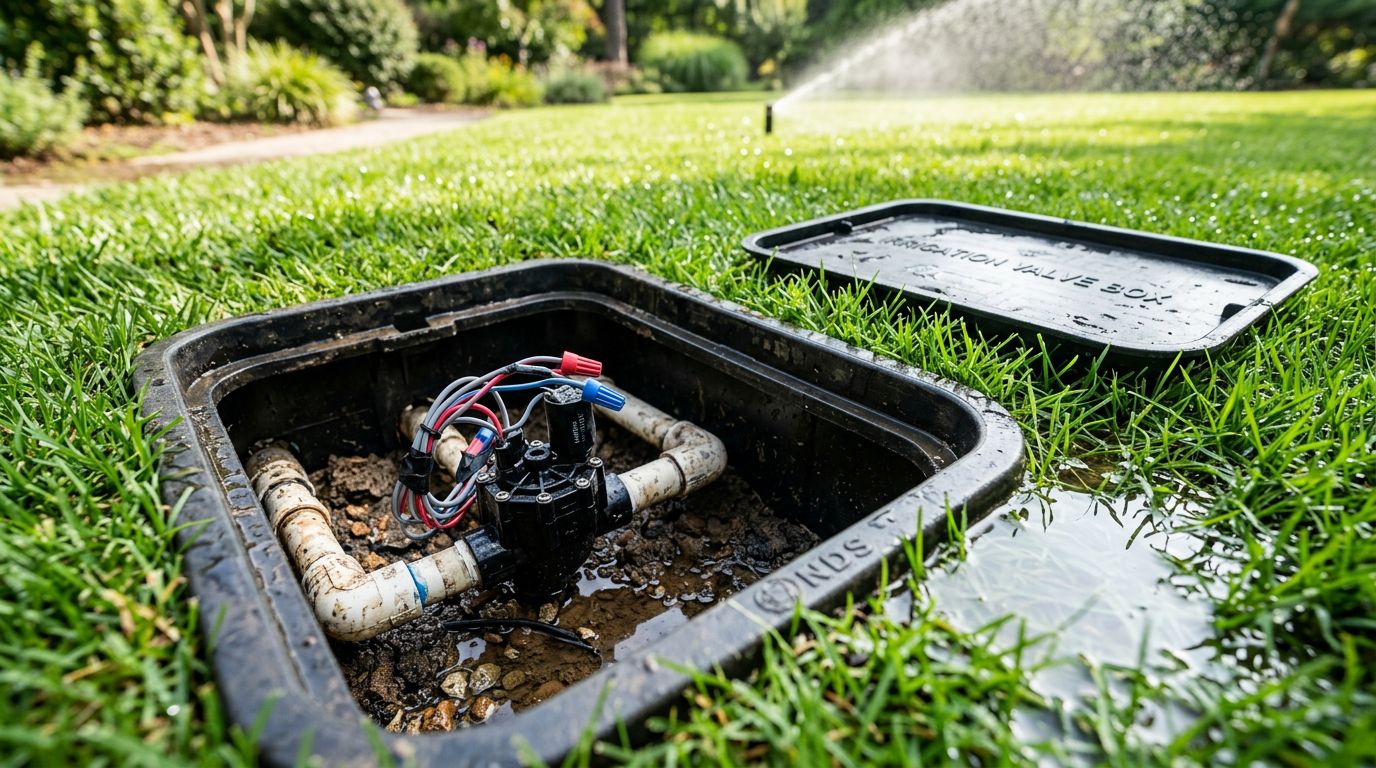
Follow these steps to troubleshoot and fix a stuck valve:
- Shut off the water. Find the main shutoff for your irrigation system and close it. This is your first move every time.
- Check the bleed screw. Look for a small screw on top of the valve. Make sure it is fully closed. An open bleed screw is an easy fix people overlook.
- Cycle the zone. Turn the water back on and run the zone from your controller, then shut it off. Sometimes a quick cycle clears a small piece of debris.
- Clean the valve. If cycling does not work, turn the water off again and open the valve by unscrewing the top. Remove the diaphragm and rinse out any dirt or debris you find.
- Inspect the diaphragm. Look for cracks, tears, or worn spots. A damaged diaphragm needs to be replaced with the correct part for your valve model.
- Check the solenoid. Make sure it is screwed in snug. Try gently tightening it. A loose solenoid can prevent a proper seal.
- Reassemble and test. Put everything back together, turn the water on, and run the zone. Confirm it shuts off completely when you stop the cycle.
Debris is one of the most frequent troublemakers we run into. In fact, dirt and buildup rank among the most common issues in irrigation systems, so a good cleaning solves more problems than you might expect.
Could a Faulty Solenoid Be the Problem?
The solenoid is a small cylinder that screws into the top of the valve, usually with two wires coming out of it. Its job is to convert the electrical signal from your controller into the mechanical action that opens the valve. When a solenoid fails, it can leave the valve stuck open or make it behave in strange ways. This is one of the more common electrical causes of a zone that won’t quit.
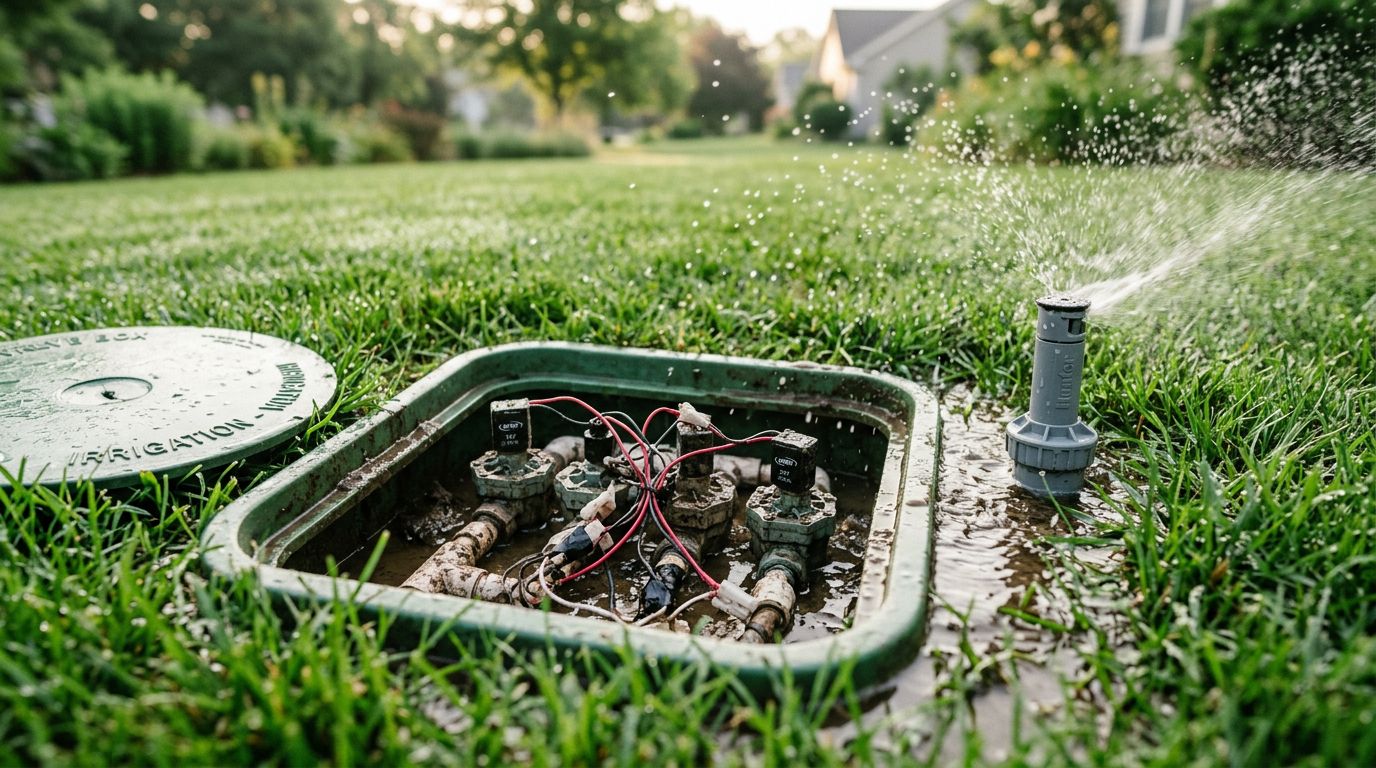
Here are some signs that point to a bad solenoid:
- The zone runs constantly even when the controller is off or unplugged.
- You hear a faint humming or buzzing coming from the valve area.
- The solenoid feels hot to the touch after the system has been running.
- Wiggling or tightening the solenoid temporarily changes the behavior.
- Corrosion or damage is visible on the solenoid or its wire connections.
- Multiple valves misbehave which can hint at a wiring or solenoid pattern.
A quick test is to unplug the controller entirely. If the zone keeps running with the controller off, the problem is likely the solenoid or the valve itself, not the timer. Replacing a solenoid is often a straightforward job, but you need to match it to your specific valve brand and model. Using the wrong part can cause more headaches down the road.
When Is It a Controller or Wiring Issue?
Not every stuck zone is a valve problem. Sometimes the real cause is in the brain of the system or the wires that connect everything. If you have cleaned and inspected the valve and it still runs, it is time to look upstream. Here is how to tell what you are dealing with.
Signs of a Controller Problem
The controller is the timer that tells each zone when to run. If it glitches or gets stuck, it can keep sending power to a zone. Try these checks. Look at the display for error messages or a frozen screen. Reset the controller by unplugging it for a minute. If the zone stops running when the controller is unplugged, the timer is the likely suspect. Old or storm-damaged controllers sometimes fail and need replacement.
Signs of a Wiring Problem
Wiring issues can be sneaky. A wire that is nicked, crossed, or shorted can send constant power to a zone even when the controller is off. Watch for wires that look chewed, corroded, or pinched. Check the wire connections at both the controller and the valve. Buried splices that got wet are a common failure point. Rodents and shovels do more damage to irrigation wiring than most people realize.
How to Narrow It Down
The unplug test is your best friend here. If the zone shuts off when the controller is unplugged, focus on the controller and wiring. If the zone keeps running with the controller completely off, the valve or solenoid is almost certainly the cause. This one simple step saves a lot of guessing. When wiring is involved, though, tracing the fault can get complicated fast, and that is often when a professional call makes the most sense.
When Should You Call a Professional Irrigation Repair Service?
Some fixes are perfect for a weekend DIYer. Others are best left to people who do this every day. There is no shame in calling for help, especially when water is being wasted or the problem is hard to pin down. A pro can diagnose the issue quickly and get your system back to running RIGHT. If you are in the area, our team offers reliable irrigation repair in Celina, TX and the surrounding communities.
Here are situations where calling a professional is the smart move:
- You cannot find the source of the problem after checking the valve, solenoid, and controller.
- Wiring is involved. Tracing and repairing buried wires takes special tools and know-how.
- The valve is buried or hard to access. Some valve boxes are tricky to reach or filled with mud.
- Multiple zones are acting up. This often signals a bigger controller or wiring issue.
- You need replacement parts and are not sure which ones match your system.
- The water waste is significant and you want it fixed fast to protect your yard and your wallet.
- You would rather not risk making it worse. A professional gets it done right the first time.
We proudly serve Celina, Frisco, Little Elm, Prosper, McKinney, Anna, Aubrey, Melissa, Gunter, and the nearby areas. Beyond irrigation repair, we also handle irrigation installation, drainage solutions, landscape design, and general lawn care, so we can look at your whole system as a whole.
Conclusion
An irrigation zone that won’t shut off is usually caused by a stuck valve, a torn diaphragm, debris, a faulty solenoid, or a controller and wiring glitch. Start by shutting off your water, then work through the simple checks like the bleed screw and a good cleaning. The unplug test is a great way to figure out whether the problem is electrical or mechanical.
If you get stuck or the water just won’t stop, do not let it run and drain your wallet. Reach out to Matehuala Landscape And Irrigation and let our team get your system back in shape so every zone shuts off exactly when it should.