Irrigation System Water Pressure Requirements (Complete Guide 2026)
Water pressure is the invisible force that makes your sprinklers work. Get the irrigation system water pressure right and your lawn gets even, healthy coverage. Get it wrong and you end up with dry patches, weak spray, or misting heads that waste water. At Matehuala Landscape And Irrigation, we deal with pressure problems all the time across Celina and the surrounding area.
In this complete 2026 guide, we break down exactly what pressure your system needs, how to measure it, and how to fix it when something feels off. Whether you have spray heads, rotors, or drip lines, knowing your numbers helps you keep everything running strong.
What Water Pressure Does an Irrigation System Need
Most residential irrigation systems run best between 40 and 65 PSI. PSI stands for pounds per square inch, and it measures how hard the water pushes through your pipes. Different components need different pressure levels, so there is no single magic number that works for every setup. What matters is matching the pressure to the type of heads you have installed.
Too little pressure and your heads will not pop up or spray far enough. Too much and you get fine mist that drifts away in the wind. Here are the general pressure ranges for common irrigation parts:
- Spray heads: 20 to 30 PSI at the nozzle
- Rotor heads: 40 to 65 PSI for full rotation and reach
- Drip irrigation: 15 to 30 PSI, often needing a pressure regulator
- Impact sprinklers: 25 to 50 PSI depending on the model
- Main supply line: 40 to 60 PSI is a healthy household range
Keep in mind these are nozzle pressures. Your incoming water pressure needs to be a bit higher to account for friction loss as water travels through the pipes and valves.
How to Measure Water Pressure in Your Irrigation System
You do not need fancy tools to check your pressure. A simple pressure gauge that screws onto a hose bib costs just a few dollars at any hardware store. Measuring your pressure is the first step before you try to fix anything, because you cannot solve a problem you have not measured. If you notice weak spray, this is often tied to the most common issue in irrigation systems that homeowners run into.
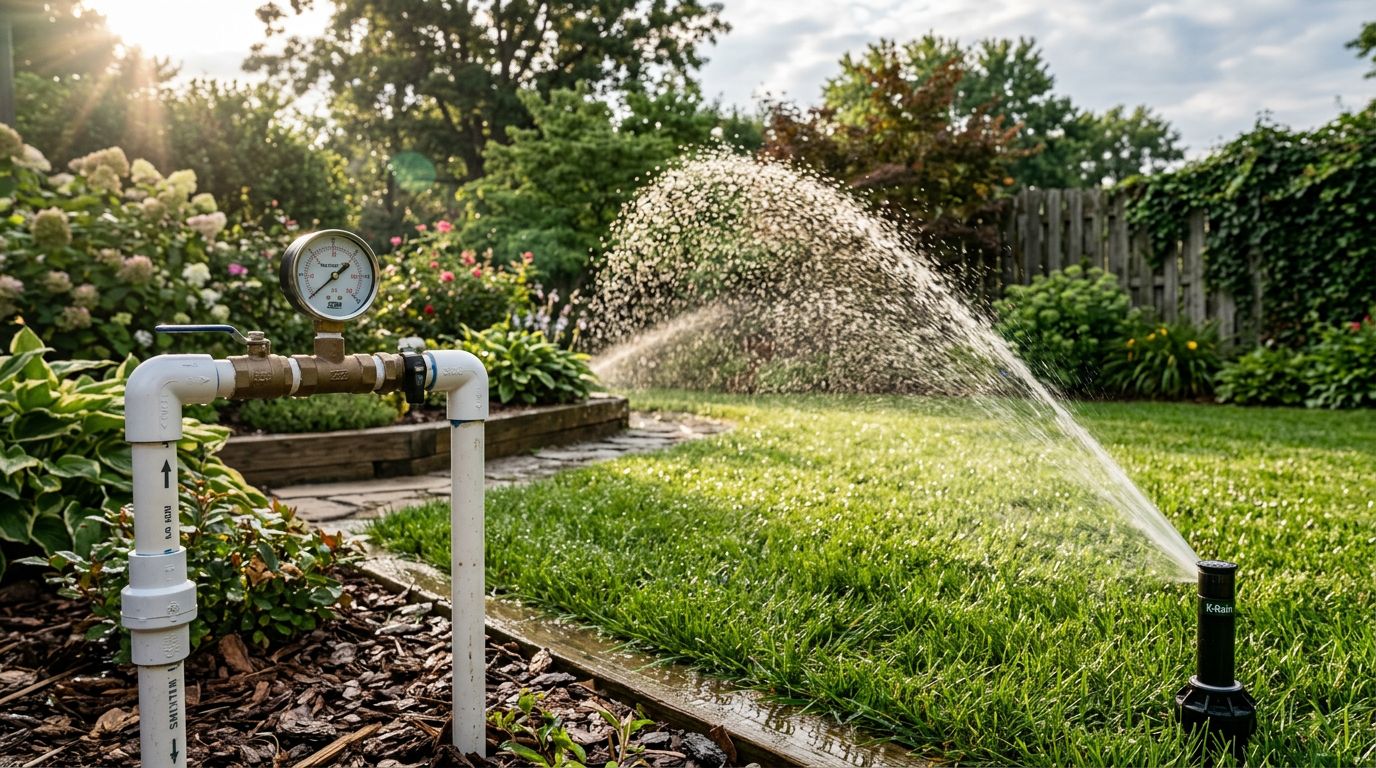
Follow these steps to get an accurate reading:
- Turn OFF any water running inside and outside the house so nothing else affects the reading.
- Find an outdoor hose bib closest to your water source or irrigation connection.
- Screw the pressure gauge onto the hose bib and hand tighten it.
- Turn the faucet on all the way and read the static pressure number.
- Write that number down; this is your resting pressure with no water flowing.
- Next, turn on one irrigation zone and check the gauge again for working pressure.
- Compare the two readings. A big drop between static and working pressure points to flow or restriction problems.
If your static pressure sits comfortably in the 40 to 60 PSI range but drops way down when a zone runs, you likely have a flow issue rather than a supply issue.
Common Causes of Low Water Pressure in Sprinkler Systems
Low pressure is one of the most frequent complaints we hear. The good news is that most causes are fixable. Here are the usual suspects.
Leaks in the Pipes or Fittings
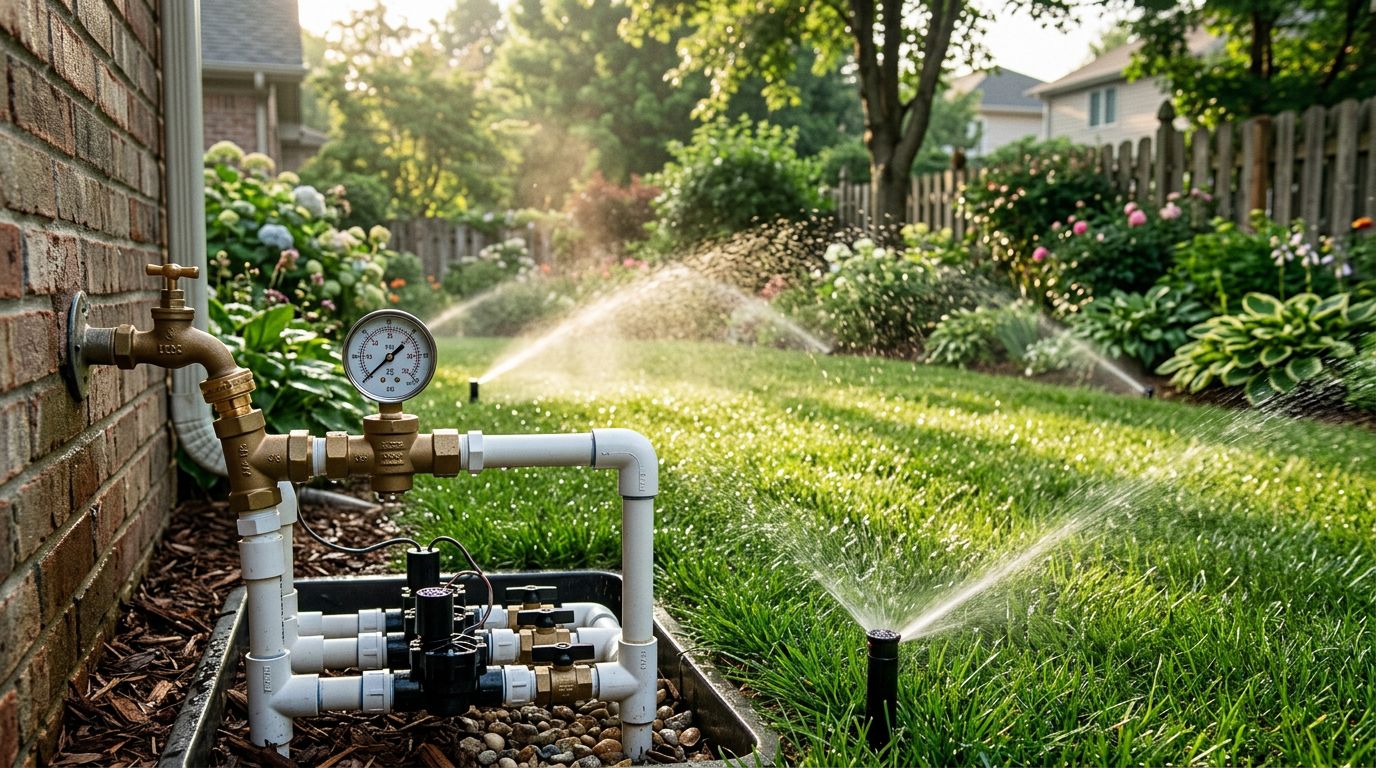
A cracked pipe or loose fitting lets water escape before it reaches your heads. Even a small leak underground can rob your whole system of pressure. Look for soggy spots or unusually green patches in the lawn.
Clogged Nozzles and Filters
Dirt, sand, and mineral buildup collect inside nozzles over time. When the opening narrows, less water gets through. Cleaning or replacing clogged nozzles often restores pressure fast.
Faulty Valves
A valve that will not open all the way chokes the flow to a zone. If one zone is weak while others work fine, the valve is a prime suspect. Watch for faulty irrigation valve signs like zones that stay slightly on or fail to reach full pressure.
Too Many Heads on One Zone
Every sprinkler head shares the available water. Put too many heads on a single zone and each one gets a smaller slice. This is a common design mistake that leaves the far heads gasping for pressure.
Partially Closed Main Valve
Sometimes the fix is simple. A main shutoff valve that was never fully opened after service will restrict flow to the entire system. Always check this before assuming the worst.
Buildup in Older Pipes
In homes with older galvanized pipes, mineral deposits can slowly narrow the inside of the pipe. This chokes flow over years and gradually lowers pressure across the board.
How to Fix and Increase Irrigation Water Pressure
Once you know what is causing the low pressure, the repair is usually straightforward. Some fixes you can handle yourself, while others are better left to a professional. Start with the easy checks and work your way toward the more involved repairs. Proper spray coverage also depends on correct head setup, so adjusting sprinkler heads for coverage is often part of the same fix.
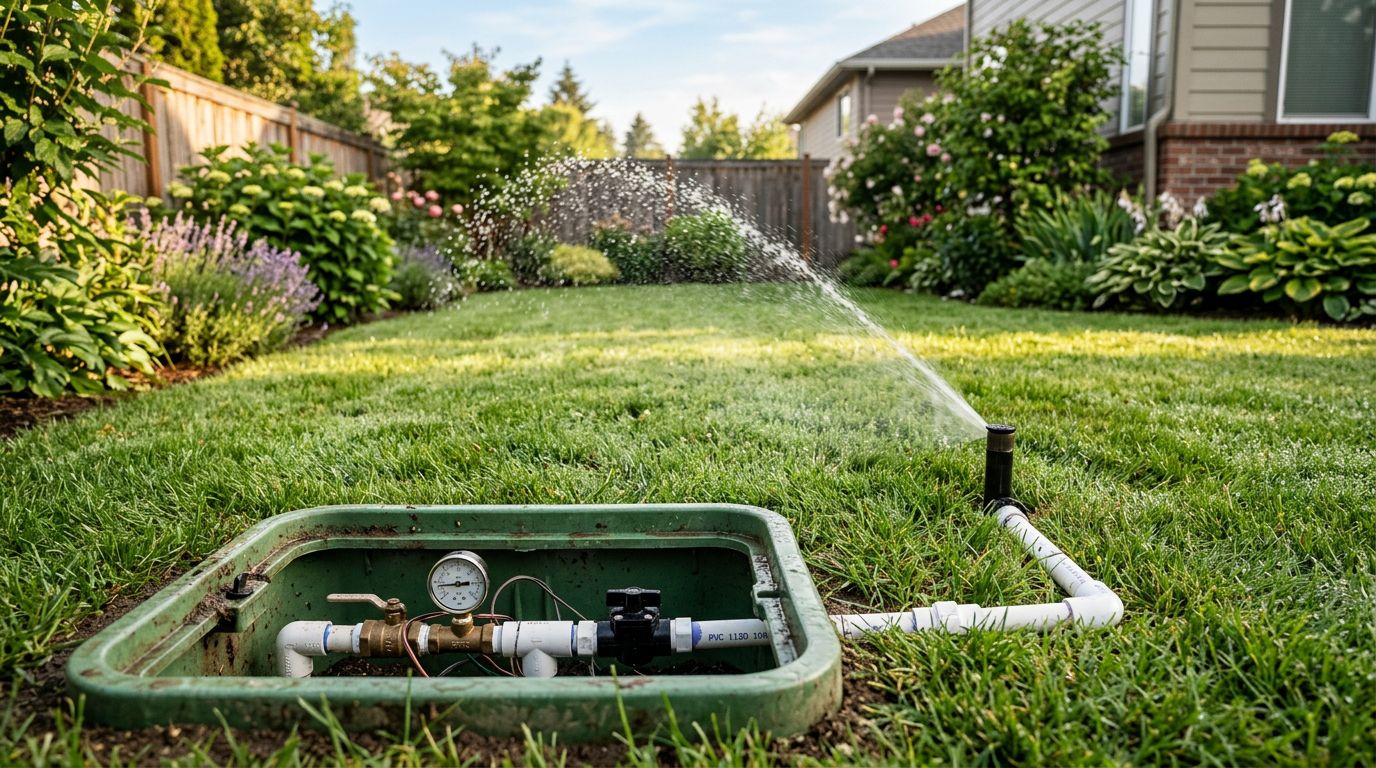
Here is our recommended order of attack:
- Confirm the main valve is fully open. This costs nothing and solves more problems than people expect.
- Clean or replace clogged nozzles and filters. Pull the nozzles, rinse out debris, and reinstall.
- Inspect for leaks. Walk the yard while a zone runs and look for wet spots, bubbling, or pooling water.
- Check and repair or replace bad valves. A stuck or worn valve limits flow and needs attention.
- Reduce the number of heads per zone. If a zone is overloaded, splitting it into two zones can restore full pressure.
- Install a booster pump if supply is genuinely low. When your incoming pressure is weak, a pump adds the extra push your system needs.
- Upgrade old restrictive pipes. Replacing corroded lines with modern PVC opens up flow again.
If you go through these steps and still cannot pin down the problem, that usually means the issue is underground or in the design itself. That is where our team can dig in and find the root cause.
Water Pressure Requirements by Irrigation Type
Not every system wants the same pressure. Matching pressure to the right head type is the key to even watering. Below we break it down by category.
Spray Head Zones
Fixed spray heads like a lower pressure, usually around 30 PSI at the nozzle. Give them too much and they atomize the water into a fine mist that blows away. If you see fog instead of droplets, your pressure is too high for spray heads.
Rotor Zones
Rotors throw water in a rotating stream over a large area. They need more muscle, typically 40 to 65 PSI, to rotate properly and reach the edges. Low pressure makes rotors stall or fail to complete their arc.
Drip Irrigation
Drip lines run at very low pressure, often 15 to 30 PSI. Too much pressure blows the emitters apart or pops fittings loose. A pressure regulator is almost always required to keep drip zones happy and leak free.
Impact Sprinklers
Those classic clicking impact sprinklers work across a wide range, roughly 25 to 50 PSI. Higher pressure helps them cover more ground, but they still perform fine at moderate levels.
Mixed Systems
Many yards combine spray, rotor, and drip zones. The trick is to NEVER mix head types on the same zone. Each zone should serve one type so the pressure stays correct for those heads. Mixing them means some heads always get the wrong pressure.
Signs of Too Much Water Pressure and How to Reduce It
Low pressure gets all the attention, but high pressure causes real damage too. Excess pressure wastes water, stresses your pipes, and shortens the life of every component. It also creates that misty fog that drifts off target and leaves dry spots behind. If your water bill is climbing or heads keep failing, high pressure may be the culprit.
Watch for these warning signs of too much pressure:
- Misting or fogging from spray heads instead of clean droplets
- Frequent leaks at fittings, seals, and connections
- Heads that pop off or crack under the strain
- Water hammer or banging noises when valves close
- Uneven coverage with heavy overspray past the intended area
- High water bills from wasted, drifting spray
To bring high pressure under control, install a pressure regulator or pressure reducing valve on your main line. These devices cap the incoming pressure at a safe level. You can also use pressure regulating spray bodies that hold each head at the ideal PSI. For drip zones, a dedicated regulator protects the delicate emitters from bursting.
If you are not sure whether your pressure runs high or low, measuring it with a gauge tells the story quickly. From there the fix is usually a simple add on device rather than a full system overhaul.
Conclusion
Water pressure sits at the heart of every healthy irrigation system. Aim for 40 to 65 PSI on the supply side, and match nozzle pressure to your head type; low for drip and spray, higher for rotors. Measure with a simple gauge, check for leaks and clogs, and never overload a zone with too many heads. When pressure runs too high, a regulator keeps everything safe and efficient.
If your sprinklers are misting, sputtering, or missing spots, Matehuala Landscape And Irrigation is ready to help across Celina, Frisco, Prosper, McKinney, and the surrounding towns. Reach out to us and let our team dial in your system so your lawn gets the even, reliable watering it deserves.